
Your Countertop Choice Matters More Than You Think
When homeowners in Fort Lauderdale start planning a kitchen remodel, the countertop decision often gets pushed to the end of the list. Cabinets, layout, appliances — those tend to steal the spotlight first. But your countertop is one of the hardest-working surfaces in your home. It handles meal prep, morning coffee spills, homework sessions, and everything in between. Choosing the wrong material can mean years of frustration, while the right one can make your kitchen feel effortless.
With so many materials on the market — and plenty of conflicting advice online — it helps to break down the options based on what actually matters: durability, maintenance, appearance, cost, and how well the material holds up in South Florida's unique climate.
The Most Popular Countertop Materials (And What to Expect)
Quartz
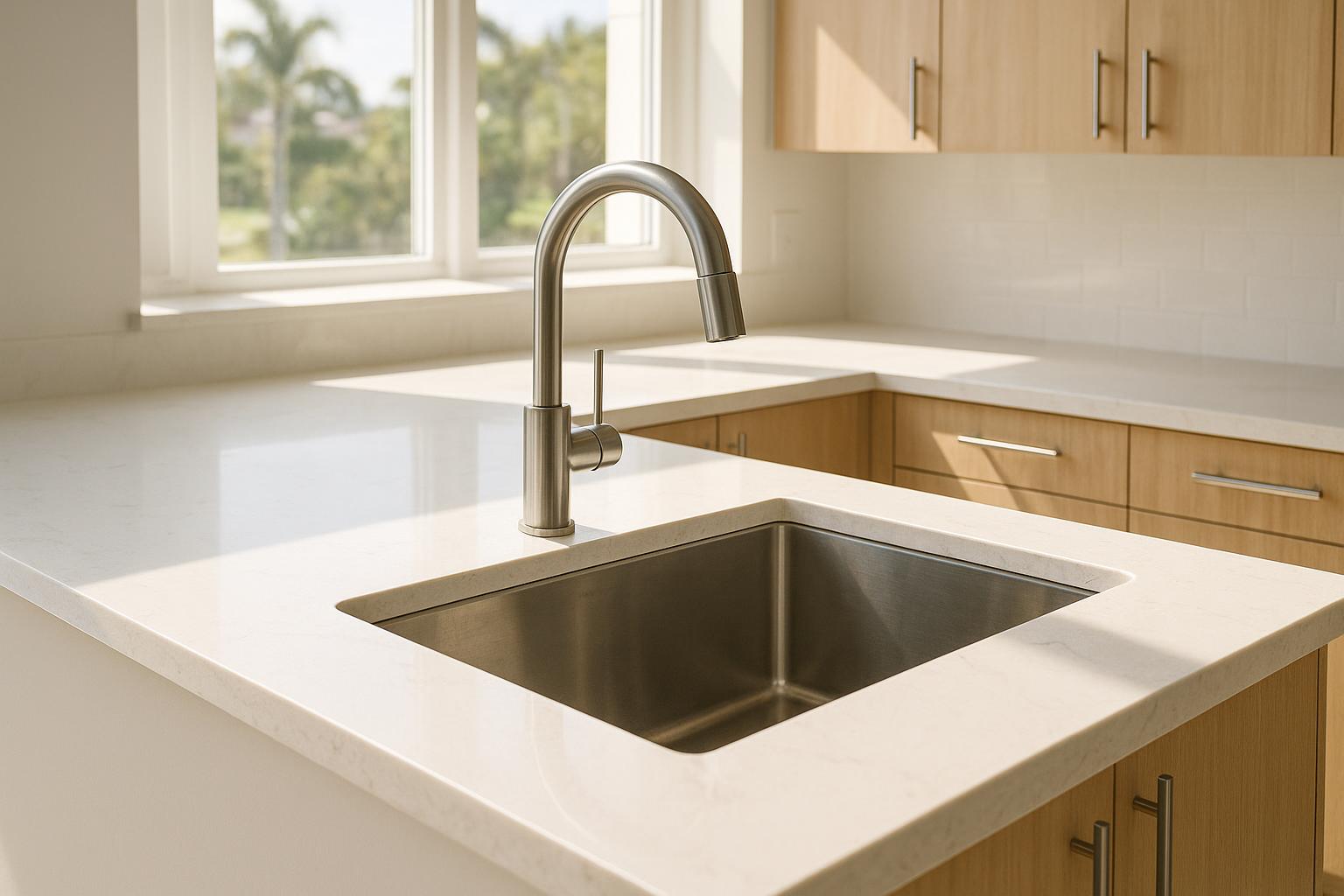
Quartz has become the go-to countertop material for Fort Lauderdale kitchen remodels, and for good reason. It's engineered from natural stone combined with resin, which means it's non-porous, stain-resistant, and extremely durable. Unlike natural stone, quartz doesn't need to be sealed — ever. That's a big deal in a humid environment where porous materials can absorb moisture and develop issues over time.
Quartz comes in a huge range of colors and patterns, including options that closely mimic the look of marble or concrete. It's a strong choice for families, avid cooks, and anyone who wants a beautiful surface without a demanding maintenance routine.
- Pros: Low maintenance, non-porous, consistent color and pattern, highly durable
- Cons: Can be damaged by excessive heat, higher price point than laminate, not ideal for outdoor kitchens (UV sensitivity)
Granite
Granite was the gold standard for kitchen countertops for decades, and it's still a solid option. Each slab is unique, offering natural beauty that's hard to replicate. It's heat-resistant, scratch-resistant, and incredibly hard. However, granite is porous, which means it needs to be sealed periodically — usually once a year — to prevent staining and moisture absorption.
In Fort Lauderdale's humid climate, staying on top of that sealing schedule matters. If you're willing to commit to the upkeep, granite delivers a timeless look that holds its value well.
- Pros: Natural beauty, heat resistant, very durable, strong resale appeal
- Cons: Requires annual sealing, can crack if impacted hard enough, limited color consistency between slabs
Marble
Marble is stunning. There's no way around it — the veining, the depth, the elegance. But marble is also high-maintenance. It's softer and more porous than granite, which makes it prone to etching from acidic foods like lemon juice, tomato sauce, and vinegar. It stains more easily and requires regular sealing.
For homeowners who love the look but use their kitchen heavily, marble may be better suited as an accent — a pastry station or island top, for example — rather than the primary countertop surface throughout the kitchen.
- Pros: Unmatched aesthetic, cool surface ideal for baking, increases home value
- Cons: Etches and stains easily, requires frequent sealing, higher cost
Butcher Block
Butcher block countertops bring warmth and texture to a kitchen in a way that stone simply can't. They're great for creating a farmhouse or transitional look, and they're surprisingly functional as a prep surface. However, wood and humidity aren't natural allies. In Fort Lauderdale, butcher block requires consistent oiling and care to prevent warping, cracking, or mold growth.
If you love the look, consider using butcher block on a single section of your kitchen — like an island — while opting for a more moisture-resistant material on perimeter counters near the sink and stove.
- Pros: Warm aesthetic, easy on knives, can be sanded and refinished
- Cons: Requires regular oiling, susceptible to moisture damage, can harbor bacteria if not maintained
Laminate
Don't overlook laminate. Modern laminate countertops have come a long way from the dated patterns of the 1990s. Today's options can convincingly mimic stone, wood, and concrete at a fraction of the cost. Laminate is lightweight, easy to install, and available in virtually any color or pattern you can imagine.
For homeowners working within a tighter budget or remodeling a rental property, laminate offers excellent value. It won't have the same resale impact as quartz or granite, but it can still transform the look of a kitchen dramatically.
- Pros: Budget-friendly, huge variety of styles, low maintenance
- Cons: Can chip or scratch, not heat resistant, difficult to repair once damaged
What Fort Lauderdale's Climate Means for Your Countertops
South Florida's heat and humidity aren't just uncomfortable — they affect building materials in real ways. Porous surfaces like granite, marble, and wood absorb moisture from the air, which can lead to staining, warping, or even mold if they're not properly maintained. Non-porous materials like quartz and laminate tend to perform better in our environment with less effort on your part.
If your kitchen gets a lot of natural light, it's also worth noting that some materials — particularly quartz — can discolor with prolonged UV exposure. This is mainly a concern for outdoor kitchens or counters directly next to large, sun-facing windows. Your remodeling contractor should be able to help you evaluate this based on your kitchen's specific layout.
Matching Your Countertop to Your Lifestyle
The best countertop isn't necessarily the most expensive one — it's the one that fits how you actually live. Ask yourself a few honest questions before making a decision:
- Do you cook frequently, or is your kitchen more of a gathering space?
- Do you have young kids who might spill juice or drag toys across the surface?
- Are you willing to seal and maintain a natural stone countertop on a regular schedule?
- Is resale value a top priority, or are you remodeling for your own enjoyment?
- What's your realistic budget for materials and installation?
Your answers will narrow the field quickly. A busy family that cooks every night has very different needs than a couple renovating a condo for weekend use.
Don't Forget About the Details
Once you've selected a material, there are still decisions to make. Edge profiles — the shape of the countertop's front edge — can change the entire feel of your kitchen. A simple eased edge looks clean and modern, while an ogee or bullnose edge leans more traditional. You'll also need to think about backsplash coordination, sink cutout style (undermount vs. drop-in), and how the countertop color works with your cabinetry and flooring.
These details might seem small, but they're what separate a kitchen that looks professionally designed from one that feels slightly off. Working with an experienced remodeling team ensures all of these elements come together cohesively.
Let's Find the Right Fit for Your Kitchen
At Blueprint Home Renovation, we help Fort Lauderdale homeowners navigate these decisions every day. Whether you're leaning toward quartz, reconsidering granite, or still weighing your options, we'll walk you through samples, pricing, and what makes the most sense for your space and lifestyle. From countertop selection through final installation, we handle every step so you can enjoy the result without the stress.
Ready to start the conversation? Reach out to our team for a consultation, and let's find the countertop that makes your kitchen work as beautifully as it looks.